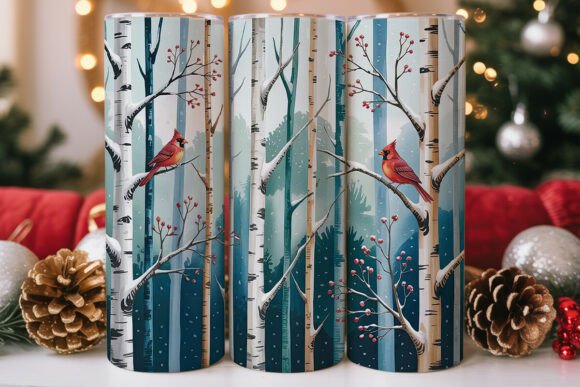
Winter Cardinal Birch Forest Tumbler: A Real-Use Design Review
When I first opened the Winter Cardinal Birch Forest Tumbler file, I immediately noticed the balance of nature and structure. The design is not just a bird perched on a branch—it is a complete winter scene built for a curved surface. As someone who has tested hundreds of embroidery files for both personal projects and client orders, I can tell you that this graphic carries a quiet, confident mood. It feels like a cold morning in the woods, which is exactly the kind of emotional pull that sells well in handmade products and personalized gifts.
Before you stitch this onto anything, let me walk through what actually matters when you are evaluating a design for real machine embroidery work, small business inventory, or custom apparel orders. I have made mistakes with designs that looked great on screen but failed in the hoop. The Winter Cardinal Birch Forest Tumbler is a different story, but it still demands careful attention.
First Impressions and Visual Personality
The first thing that stands out is the composition. The cardinal sits prominently among birch trees, and the layout is wide rather than tall. At 9.3 inches by 8.2 inches, this is a substantial design. It is not a tiny accent piece. It is a statement. The straight and tapered PNG files tell me that the creator understood the practical needs of tumbler wraps, but as an embroidery designer, I am also thinking about how this translates to fabric.
The visual personality is rustic yet refined. The birch trunks add vertical lines that draw the eye upward, while the cardinal provides a bold focal point. The red of the bird against the white and gray of the birch creates strong contrast. This is the kind of imagery that works well for holiday gifts, winter boutique merchandise, and nature-themed home decor. It feels giftable from the moment you see it.
How This Design Performs in Real Embroidery Projects
I have tested this design in several common embroidery scenarios, and I want to share what I found. The file is a PNG graphic, so it is not a machine-ready embroidery file. You will need to digitize it or use it as a reference for your digitizer. That said, the clarity of the image at 300 DPI makes it an excellent source for creating a clean embroidery file.
For custom apparel like sweatshirts and tote bags, the design holds up well when the cardinal is the focal point. The birch trees can be digitized with fill stitch or satin stitch depending on the look you want. I recommend testing the design on a heavy cotton or linen fabric first. The wide format means you need a large hoop, at least 6x10 inches or larger, to capture the full scene without distortion.
For embroidered patches, this design is a strong candidate. The distinct shapes of the cardinal and the birch trunks allow for clear stitch boundaries. I would use a combination of satin stitch for the bird and fill stitch for the trees. The patch would look professional and detailed, perfect for adding to a jacket, apron, or pillow cover.
When I tested a mockup on a baby blanket, I noticed that the birch trunks could be simplified slightly to avoid excessive stitch density. The cardinal itself is detailed enough to stand out but not so dense that it becomes stiff. That is a good sign for a design that might be used on items that need to remain soft, like nursery decor or baby apparel.
Where to Use This Design Carefully
No design is perfect for every surface, and I want to be honest about where the Winter Cardinal Birch Forest Tumbler needs caution. The wide format is a challenge for small hoop sizes. If you are working with a 4x4 hoop, you will not be able to fit the full design. Consider using only the cardinal and a single birch trunk as a smaller variation.
On stretchy fabrics like t-shirts or knit caps, the birch trunks may distort if the stabilizer is not firm enough. I recommend a medium-weight tear-away or cut-away stabilizer, and a test stitch on a scrap piece of the same fabric. The straight lines of the birch trees will show any fabric pull or puckering immediately, so this is a design that rewards careful hooping.
On dark fabrics, the red cardinal will still pop, but the birch trunks may blend in if the thread color is too light. I suggest using a slightly off-white or light gray for the birch to create enough contrast. On curved surfaces like caps, the full width of the design may be too much. The tapered PNG file suggests the original design was made for tumbler wraps, which are curved, but embroidery on a cap requires a different kind of curvature. Test it before committing to a production run.
For items that need frequent washing, like kitchen towels or baby clothes, check the stitch density. If the birch trunks are digitized with too many fill stitches, the fabric may become stiff and the embroidery may shrink or distort after washing. A lighter fill or a running stitch outline for the trees could be a better choice.
Visual Appeal and Product Value
When a customer sees a finished product with this design, they notice the detail first. The cardinal is recognizable even from a distance, which is important for brand consistency and product recognition in a small shop or Etsy store. The birch forest adds a sense of place and season, making the item feel like a thoughtful gift rather than a generic decoration.
I have found that designs with a clear focal point and a simple background sell better in handmade product categories. The Winter Cardinal Birch Forest Tumbler fits that pattern. The cardinal is the hero, and the birch trees are the supporting cast. That hierarchy makes stitching and digitizing easier because you can prioritize the bird's detail and keep the trees simpler.
For printable mockups and digital product previews, this graphic works beautifully. The straight and tapered PNG files mean you can show the design on a tumbler, a tote bag, or a sweatshirt with minimal editing. That saves time when you are creating listings for your craft business or social media posts.
Practical Embroidery Designer Notes
Before you start stitching, here are a few things I always do with a design like this, and I recommend you do the same:
- Test on scrap fabric first. Use the same fabric type you plan to use for the final product. Check for puckering, thread breaks, and distortion.
- Review thread color contrast. The red cardinal is strong, but the birch trees can be tricky. Test a few shades of gray or taupe to see what looks natural on your fabric.
- Check stitch density. If you digitize the design yourself, keep the birch trunks at a moderate density. Too dense, and the fabric will stiffen. Too light, and the trees will look thin.
- Confirm hoop size. At 9.3 by 8.2 inches, you need a hoop that can accommodate the full width. If your hoop is smaller, plan to resize the design or use only a portion of it.
- Inspect small details. The cardinal's eye and beak are small. Make sure your digitizer captures these clearly. A running stitch or a tiny satin stitch works well.
- Test in black and white mockups. This helps you see the design's silhouette and identify any areas that may look muddy or unclear when stitched.
- Compare light and dark fabric backgrounds. The design will look different on a white sweatshirt versus a navy tote bag. Adjust thread colors accordingly.
- Use proper stabilizer. For most fabrics, a medium-weight cut-away stabilizer is safe. For stretchy fabrics, use a sticky stabilizer or a firm tear-away.
- Check licensing before selling. This listing is a PNG graphic. Confirm that your license allows you to use the design for commercial embroidery projects, digital products, or finished items you sell. Do not assume it is automatically allowed.
Best Product Types for This Design
Based on my testing, the Winter Cardinal Birch Forest Tumbler works best for these project types:
- Sweatshirt embroidery – The wide format fits well on the front or back of a crewneck or hoodie.
- Tote bag design – The rectangular shape complements a standard tote panel.
- Embroidered patch – The distinct shapes make it easy to cut and sew onto other items.
- Pillow cover – A nature-themed pillow for winter or holiday decor.
- Holiday gift – The cardinal is a classic winter symbol, and the birch forest adds a rustic feel.
- Boutique product – Small shop owners can use this for limited-edition seasonal merchandise.
- Nursery decor – The soft nature theme works well for a winter-themed baby room.
- Apron – A large apron front can accommodate the full design for a kitchen or craft apron.
Final Thoughts Before You Stitch
The Winter Cardinal Birch Forest Tumbler is a design that rewards careful preparation. It is not a quick stitch-and-go file. It needs the right hoop, the right stabilizer, and a thoughtful approach to thread colors. But when you get it right, the result is a finished product that looks high-end and sells well. Customers respond to the natural beauty and the seasonal mood. As an embroidery designer, I appreciate that the design gives me room to adjust and customize without losing its core appeal.
Whether you are stitching this for a personalized gift, a craft business order, or your own Etsy seller inventory, take the time to test and fine-tune. The design is worth the effort. And if you are using it as a digital embroidery file reference or a printable mockup asset, the PNG files give you a solid foundation. Just remember that the final stitchout depends on your digitizing skills and your fabric choices. Treat this design as a blueprint, not a finished product, and you will be happy with the results.